Podívejte se na plán online
Aktuální verze Metropolitního plánu se zapracovanými připomínkami je připravena. Prozkoumejte, jak vypadá, z pohodlí domova.
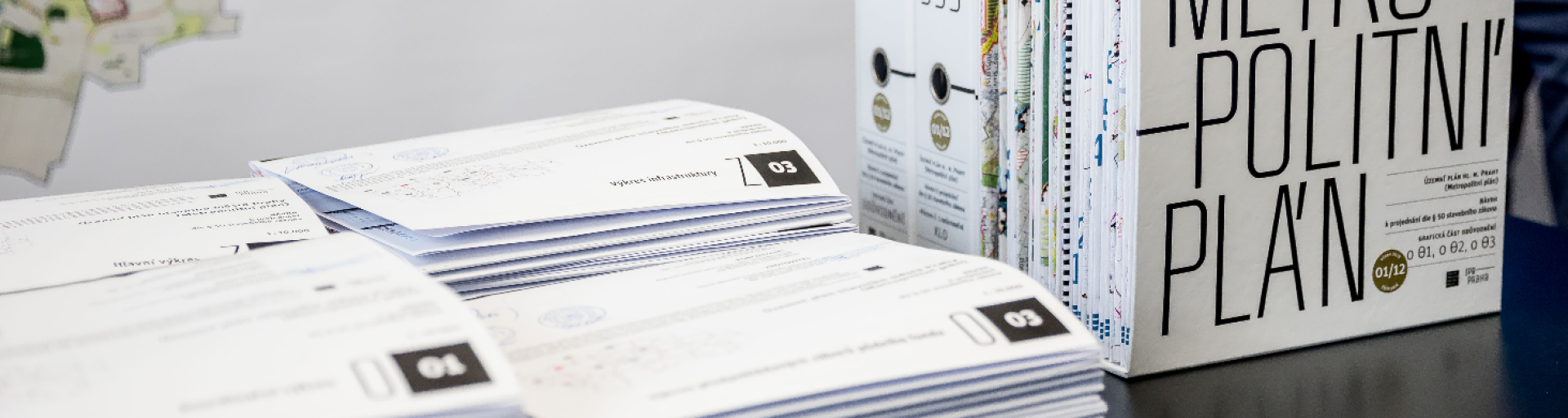
Metropolitní plán jako nový územní plán pro Prahu brání nekontrolovanému rozšiřování města do okolní krajiny. Stanovuje jasné limity pro výšku budov, chrání ty stávající a navrhuje nová veřejná prostranství či vybavenost. Zároveň určuje charakter jednotlivých částí města. Oproti současnému územnímu plánu je přehlednější a srozumitelnější jak pro veřejnost, tak pro úředníky. Předchází nečekaným situacím – například tomu, aby ve vilové čtvrti vyrostl mrakodrap – a zajišťuje, že nová výstavba bude respektovat ráz svého okolí. Důraz klade také na přeměnu bývalých průmyslových oblastí v nové městské čtvrti a podporuje vznik nových parků a zelených ploch.
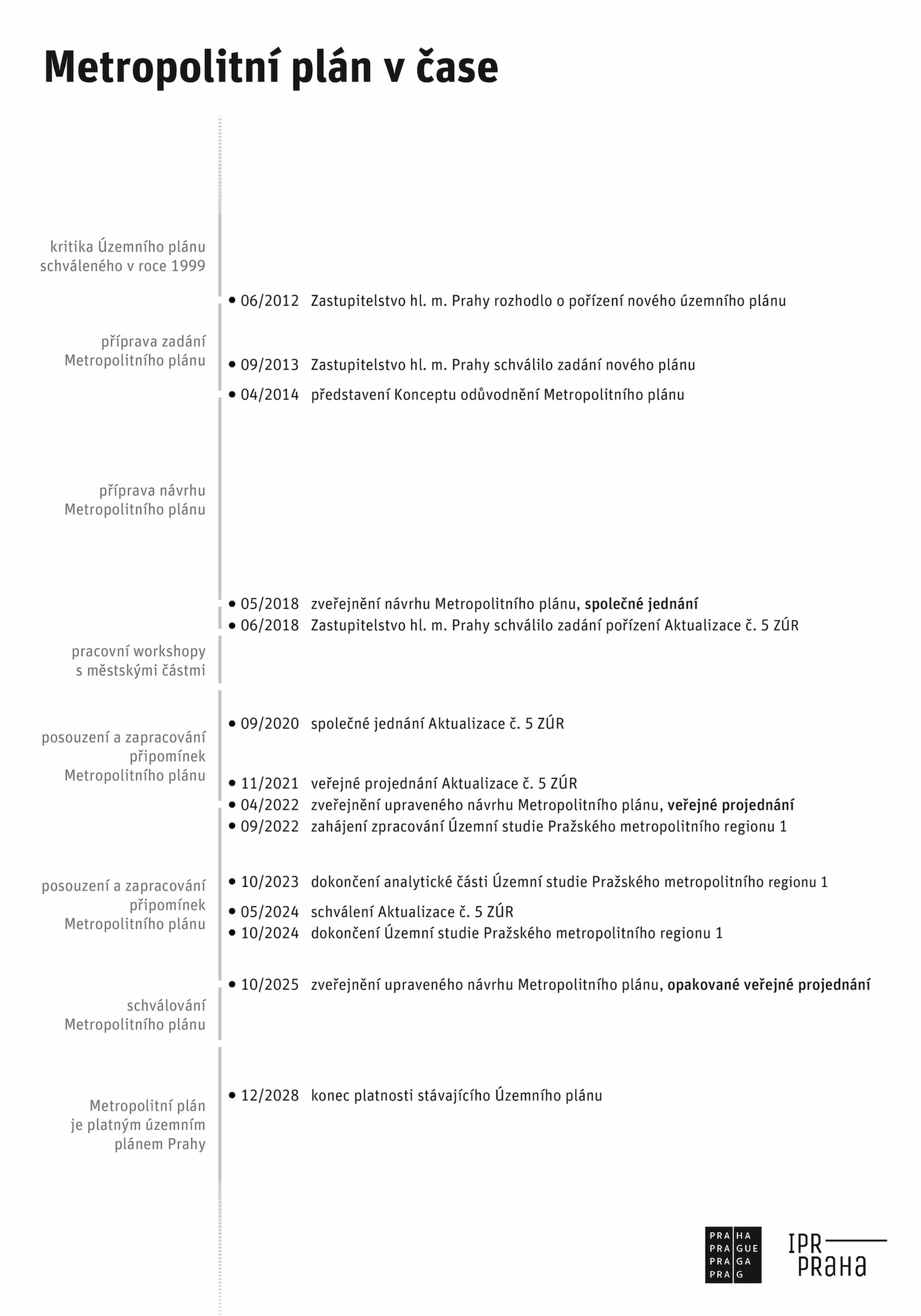
Metropolitní plán začal vznikat v roce 2012 a po šesti letech přípravy se poprvé zveřejnil. První kolo sběru připomínek probíhalo v roce 2018, a to primárně od tzv. dotčených orgánů státní správy, ale i veřejnosti a městských částí. Občané se mohli k plánu znovu vyjádřit v roce 2022. Všechny podané připomínky potom Odbor územního rozvoje Magistrátu hl. m. Prahy vyhodnocoval. IPR následně výsledky zanesl do současné podoby Metropolitního plánu, jehož upravený návrh opět zveřejňujeme v Centru architektury a městského plánování (CAMP) od 20. října do 3. prosince 2025.
Pro dotazy týkající se Metropolitního plánu vyplňte tento formulář.

Aktuální verze Metropolitního plánu se zapracovanými připomínkami je připravena. Prozkoumejte, jak vypadá, z pohodlí domova.

Podívejte se na záznam diskusních večerů, které byly součástí doprovodného programu opakovaného veřejného projednání v CAMPu.

Územní plán není jediný dokument, který se na budoucnosti Prahy a jejího okolí podílí. Klíčovými dokumenty jsou také Zásady územního rozvoje nebo studie Pražského metropolitního regionu.
Zásady územního rozvojePražský metropolitní regionJak Metropolitní plán vznikl a které publikace ho formovaly?
Hustota a ekonomika městUniverzální [územní] plánÚzemní plán je plánem rozvoje obce. Říká, kde a co je možné stavět a kde to naopak možné není. Nepřikazuje, aby stavby vznikaly, ale právně tuto možnost umožňuje nebo neumožňuje. O umístění konkrétní stavby pak s územním plánem v ruce rozhoduje stavební úřad.
Územní plán pro velká města je i vzhledem ke komplikované české legislativě relativně složité dokončit, jelikož plán musí být společnou dohodou. To je o něco snadnější v menším městečku, komplikovanější však v případě Prahy, Brna či Ostravy. Vznik plánu se pak musí řídit jasně danými pravidly, která vyplývají ze stavebního zákona.
Územní plán je závazným dokumentem. Často je mylně považován za „všelék“ na neduhy města. Není ale zdaleka jediným dokumentem, který má vliv na budoucnost Prahy a podle kterého se rozhoduje. Územní plán v Praze pořizuje magistrátní Odbor územního rozvoje, IPR je pak jeho projektantem, který dodá městu návrh. Do celého procesu v zákonem stanovených termínech vstupuje celá řada institucí a svoji připomínku ke vznikajícímu plánu může vyjádřit také každý občan.
Od 30. let 20. století se prosazovala idea, že je město potřeba rozdělit na zóny práce, bydlení a rekreace, mezi kterými se budou obyvatelé přepravovat zónami dopravy. Brzy ovšem původní čtyři funkce přestaly stačit a v územních plánech se zóny začaly drolit na menší a menší plošky. V současném plánu jich je již přes devadesát druhů. Plán tak sice velmi podrobně řeší, co se tam či onde smí dít, ale dostatečně se nezabývá prostorovou urbanistickou strukturou města – kudy má vést hranice mezi domy a veřejným prostranstvím, kolik smí mít budova pater, jak se má chovat vůči okolním budovám.
Druhým problémem současného plánu je jeho nestabilita: jen mezi lety 2000 a 2012 bylo projednáváno 2060 změn územního plánu. Každá z nich stojí čas i peníze a plánování stavby se prodlužuje o několik let. Plán sice podrobně říká, k čemu se smí a nesmí využít ta či ona parcela, to se však velmi brzy dostalo do rozporu s realitou: demografickým vývojem i ekonomickou využitelností území. O změny si žádali jak investoři, tak zástupci městských částí, kteří chtěli postavit např. školku na novém místě, anebo jednotlivci, kteří si v přízemí rodinného domku chtěli otevřít ordinaci. Množstvím změn ztratil územní plán na vážnosti a závaznosti. Tomu se chce Metropolitní plán vyhnout. Proto se snaží nastavit regulativy tak, aby jich bylo méně, ale aby byly jasné a Prahu chránily a rozvíjely.
Jedním z hlavních charakterových rysů Prahy je její různorodost. Tvoří ji různé čtvrti, z nichž každá má svůj specifický charakter, vzhled, výšku domů či uspořádání ulice – od malebných uliček Starého Města přes blokovou strukturu Vinohrad až po rozmanitou zástavbu pražských sídlišť. Tím je každá část Prahy jedinečná. Jedním z klíčových nástrojů Metropolitního plánu je proto vymezení tzv. lokalit, jež jsou průnikem charakteru zástavby, krajinné topografie, sociální a ekonomické situace v území a místních specifik. Lokalita má svou vnitřní logiku i opodstatnění: je to buňka v těle, která disponuje svou určenou lokací a rolí v rámci složitého organismu města. Metropolitní plán lokality chrání a zachovává Prahu takovou, jakou ji máme rádi.
Praha poprvé ve své historii plošně reguluje výšku staveb, a chrání tak své výhledy. Výšková regulace pomůže stavební energii přenést tam, kde má smysl, a zamezí zubům na siluetách pražských čtvrtí. Pro vybrané lokality plán určuje tzv. hladinu věží – tedy místa, kde je možné umisťovat výškové budovy. Jejich podoba se posuzuje podle dopadu na panorama města, a to prostřednictvím vybraných panoramatických fotografií. Posuzuje se měřítko zástavby, adekvátnost zásahu vzhledem k umístění a význam budovy jako lokální dominanty nebo orientačního bodu v rámci celé Prahy. Například Pankrác má jasně stanovený výškový horizont, který jasně říká, jak vysoké stavby se v jeho okolí mohou objevit.
Metropolitní plán také definuje, jak intenzivně se kde může stavět. Přichází s jednoduchým vzorcem, který bere v potaz, kolik metrů čtverečních zástavby je možné v dané ploše umístit a jakou část z ní je možné zastavět při dodržení počtu pater.
Město v Plánu není popsáno jen z hlediska budov, ale především skrze ulice, náměstí a parky – tedy míst, kde se potkáváme. U veřejných prostranství je důležité rozlišovat jejich hierarchii, kompozici a oddělovat části organizující město. V chaotické zástavbě je složité definovat uliční prostor, vztahovat k němu umísťování zástavby i infrastruktury a vnímat skrze něj krajinu ve městě. Metropolitní plán se proto nejen zaměřuje na rozvoj a kultivaci veřejných prostranství, ale zároveň je rozděluje do čtyř úrovní podle lokálního významu: metropolitní, čtvrťové, lokalitní a místní. Praha by měla sloužit všem obyvatelům, a nejen proto hraje důležitou roli i prostupnost a bezpečnost. Tu plán podporuje vymezením pěšin a stezek, které vedou skrze zástavbu, parky i volnou krajinu. Doplňkovou vrstvu pak tvoří informace o veřejně přístupném parteru. Existence služeb a obchodů v parteru poskytuje skutečný pocit toho, čemu říkáme „město“.
Prahu čekají zásadní dopravní výzvy, od výstavby metra D a Městského okruhu po nové tramvajové tratě a vysokorychlostní železnici. Metropolitní plán zrychlí výstavbu dopravních staveb tím, že již počítá s koridory klíčových projektů, a zjednodušuje tak schvalovací procesy. Koncepce dopravy je založena na vyváženém systému veřejné, automobilové a bezmotorové dopravy zajišťující potřebnou úroveň mobility ve městě. Silniční, železniční, říční i letecká doprava je řazena podle své důležitosti, ale kromě velkých projektů plán nezapomíná ani na cyklotrasy nebo významná pěší propojení. Kromě liniových jsou v mapě i bodová označení jako pro stanici metra, parkoviště P+R, říční přístav nebo železniční překladiště.
Koncepce technické infrastruktury je založena na plynulém a bezporuchovém dodávání potřebných médií, které je schopné zvládat výpadky a krizové situace a nechává dostatečný prostor pro budoucí rozvoj. Aby toho bylo dosaženo, je důležité sdružování sítí do koridorů a jejich účelné prostorové uspořádání.
Bydlení a bytová zástavba v Praze potřebuje pomoct. Proto Plán počítá s vymezením lokalit, v rámci kterých je zakořeněn i způsob využití území, definující plochy pro bydlení. Jestliže je například ve stávající struktuře zahradního města přípustná i stavba pro obchod, bude to jen stavba, která je stejně velká jako rodinné domy v okolí. V případě zcela nových rozvojových ploch se Metropolitní plán snaží nepřidávat žádné nové na okraj města a spíše se zaměřuje na zanedbané plochy a brownfieldy uvnitř Prahy. U těch se postupuje s ohledem na schválené, ale i probíhající změny současného územního plánu a spoléhá se na ekonomické a udržitelné studie nových čtvrtí, jež zacelují staré šrámy města. Díky Plánu tak vznikne bydlení pro desetitisíce rodin, ovšem pouze v místech, kde to dává smysl.
U historických měst bylo díky hradbám vcelku jednoduché říct, kde město začíná a končí. Ovšem v případě soudobých evropských metropolí je to otázka komplexnější. Praha už dávno ztratila svůj hradební okrsek a jako město obecně pozbyla své zřetelné hranice díky modernistickým sídlištím, zahradním městům a kobercové zástavbě rodinných domků. Hlavním cílem územního plánu je proto znovu definovat hranici města, kde se zastavitelné území mění v nezastavitelné a kde se město mění v krajinu volnou. Metropolitní plán tak zabraňuje dalšímu rozpínání města do krajiny a krajinu uvnitř Prahy chrání. Vymezuje síť biocenter a biokoridorů, které podporují ekologickou stabilitu, chrání zvířata i rostliny a pomáhají zadržovat vodu v krajině. Zachycuje veškerou volnou krajinu, nově navrhuje zalesnění vybraných ploch, území určená pro šetrné zemědělství i místa určená k rekreaci. Jedním z důležitých témat Plánu je také řeka – její koryto i přilehlé okolí jsou v Plánu jasně vymezeny a chráněny.
Jedním z hlavních principů Metropolitního plánu je tzv. návrat ke středu, který znamená podporu výstavby v širším centru města vyplňováním prázdných nebo zanedbaných plošných rezerv. Sem spadají například i tzv. brownfieldy neboli opuštěné a nevyužívané areály určené k přeměně nebo přestavbě. O tyto pozemky má zájem nejeden pražský developer – jenže kromě samotné výstavby bytů je potřeba investovat také do veřejné infrastruktury, jako jsou školy, školky, parky, veřejná prostranství nebo třeba nové tramvajové tratě. Město ani městské části však často nemají dostatek peněz, a proto je zásadní, aby se na těchto výdajích finančně podíleli i investoři, jejichž projekty danou oblast proměňují. To je možné díky metodice spoluúčasti investorů, která na základě transparentního výpočtu určí, jakou měrou se investor bude na výstavě vybavenosti podílet. Metropolitní plán nastavuje férové prostředí pro developery tak, aby se plánovaná výstavba stala příjemným a pohodlným místem pro život.
Školy, školky, nemocnice, obchody nebo třeba místa pro sport a rekreaci, to jsou jen některé prvky veřejné vybavenosti, se kterou Metropolitní plán počítá a pracuje. Usiluje o dostatečnou a kvalitní síť služeb každé lokality, aby měli její obyvatelé vše, co potřebují, přímo v místě bydliště. Z Prahy se tak do budoucna stane metropole krátkých vzdáleností. Pro naplnění celkové koncepce je veřejná vybavenost rozdělena na komerční, občanskou a rekreační. Komerční vybavenost je v plánu znázorněna pouze ta stávající, na rozdíl od občanské a rekreační. Díky tomu víme, kde se v Praze postaví nový bazén, škola, nemocnice nebo fotbalové hřiště.
Postupujeme přesně podle požadavků zákona, který dává veřejnosti na připomínkování 37 dní. My jsme pro jistotu tuto lhůtu ještě o týden prodloužili a přidali nad rámec zákona ještě jedno celodenní opakované veřejné projednání, takže budou celkem dvě.
Je třeba si ale uvědomit, že to hlavní připomínkování v rámci tzv. veřejného projednání v roce 2022 je už za námi. Nyní si de facto může veřejnost zkontrolovat, zda a jak byly připomínky zapracovány. Lze to označit neformálně tedy za projednávání verifikační či kontrolní.
Nejlepší cesta je digitálně přes portál Pražana (přes Portál územního rozvoje), tedy oficiální online připomínkovací aplikaci. Elektronické podání je pohodlné, protože si můžete plán digitálně načíst a připomínkovat konkrétní prvek. Můžete to učinit přímo na výstavě či z pohodlí domova nebo práce.
Dokonce můžete využít novou funkci, kterou jsme pro vás letos připravili, a tou je možnost zkopírovat si původní připomínku z vašeho podání z roku 2022 a uplatnit ji znovu, ať už v totožné, nebo pozměněné podobě, či ji označit za souhlasnou (akceptační), pokud jste již s návrhem Metropolitního plánu spokojeni.
Pokud využijete připomínkování přes Portál Pražana, nám to umožní zpracovat všechny přijaté připomínky rychleji a hned se jimi zabývat. Metropolitní plán je možné připomínkovat od 20. 10. do 3. 12. včetně. Otázky zodpoví osobně kustodi CAMPu a odborníci z řad Odboru územního rozvoje MHMP. Ti vám zároveň s podáním připomínky ochotně pomohou.
K Metropolitnímu plánu se může ve fázi veřejného projednání vyjádřit kdokoli, občan či instituce. Připomínkovat je možné jen ty části plánu, které se od minulého projednání v roce 2022 upravily (změnily).
Námitka je silnější než připomínka. Námitky může podávat osoba, která prokáže, že je dotčena návrhem řešení v Metropolitním plánu. To je tedy zpravidla vlastník nebo spoluvlastník nějaké nemovitosti či pozemku. Do Portálu Pražana při zadávání jednotlivých požadavků pak stačí zvolit místo připomínky námitku a v příslušném kroku doložit právo podat námitku, např. tak, že nahrajete sken, který dokládá vaše vlastnictví.
Námitky také mohou podávat tzv. oprávnění investoři, např. správci sítí, a dále zástupci veřejnosti, tedy občané a subjekty, kteří seženou a doloží podpisy (zmocnění) alespoň od 200 osob.
Jednoduše si porovnáte starou a novou verzi plánu. Stará verze je ke stažení na webu praha.eu. Případně je dostupná přímo na Portálu Pražana v té části, kde si můžete importovat připomínky z roku 2022, tedy zkopírovat a převést původní připomínky do nového podání. Tam můžete porovnávat výkresy staré a nové verze plánu.
Z hlediska výkresů (grafické části) jsou v odůvodnění v příloze 10 kapitoly 1 k dispozici i rozdílová schémata, která vám pomohou identifikovat, zda se v daném místě něco změnilo. Z hlediska změn v textové části je také v odůvodnění v příloze č. 8 kapitoly 1 obsažena textová část s revizemi, kde všechny změny přehledně uvidíte. Pokud si nejste jisti, obraťte se na odborníky z Odboru územního rozvoje MHMP, kteří vám s tím pomohou. Pokud váháte, popřípadě vám něco není jasné, připomínku určitě podejte. Úřad se jí bude zabývat a její relevantnost vyhodnotí. V pochybnostech vždy platí, že přednost má vaše právo připomínku uplatnit.
Příklad: Přestože by se mohlo zdát, že se ve výkresech v určité části nic nezměnilo (např. rekreační lokalita XY je vymezena stále stejně a ve výkresech není žádný rozdíl), avšak v textové části došlo ke změně formulací, které se týkají regulativů právě rekreačních lokalit, tj. všech rekreačních lokalit, je daná konkrétní rekreační lokalita XY také de facto měněnou částí, kterou můžete připomínkovat (jak ve výkresech, tak v textové části v regulativech), i když se na první pohled nezměnila.
Námitky mohou podávat tzv. zástupci veřejnosti, tedy občané a subjekty, kteří seženou a doloží podpisy (zmocnění) alespoň od 200 osob. Seznam 200 jmen s adresami trvalého pobytu a vlastnoručními podpisy, obsahující jednoznačné zmocnění pro vás jakožto zástupce veřejnosti, je třeba naskenovat a vložit jako přílohu na Portál Pražana do té části, kde jsou údaje o subjektu, který připomínkuje.
Je třeba zvolit možnost “přihlášený zastupuje připomínkujícího” a jako připomínkujícího vybrat zástupce veřejnosti. Sem pak nahrajete sken seznamu s 200 jmény a adresami trvalého pobytu a vlastnoručními podpisy, obsahující jednoznačné zmocnění pro vás jakožto zástupce veřejnosti. Bude-li to nutné, úřad vás případně vyzve k následnému fyzickému doložení seznamu na podatelnu k ověření dokumentu.
Každou připomínku, která dorazila, pořizovatel vyhodnotil a zvažoval, a to komplexně a v souvislostech, společně se zpracovatelem (IPR). Ne všechny připomínky ale mohou být vypořádány souhlasně a může jim být vyhověno, neboť jsou často protichůdné, nebo někdy dokonce již neaktuální. Důvodem nevyhovění také může být střet s některým z veřejných zájmů, který chrání dotčené orgány, nebo rozpor s nějakými limity v území, rozpor s nadřazenou dokumentací či rozpor s koncepcí nebo metodikou plánu apod. Vypořádání připomínek vždy ctí celkovou koncepci Metropolitního plánu a zároveň kontinuitu územního plánování.
Obecně ale platí, že bylo vyhověno obrovskému množství připomínek a námitek, a to jak konkrétních, tak systémových a metodických, které vedly k vylepšení plánu. Jako příklad lze uvést, že bylo vyhověno 75 % požadavků městských částí, které se týkaly konkrétních území a kterým bylo možné vyhovět.
To poznáte přímo z výkresů (nebo textů) Metropolitního plánu, který byl právě zveřejněn. V Portálu Pražana můžete také vidět své dříve podané připomínky a při jejich zkopírování do nového podání (tzv. import) můžete snadno porovnávat původní a novou verzi plánu. Zkrátka zda bylo, či nebylo vyhověno, to poznáte přímo z Metropolitního plánu.
Jiná věc je, jak zjistit, proč bylo, či nebylo vyhověno. Tedy zda můžete obdržet vypořádání vaší připomínky, nebo dokonce vypořádání všech připomínek. V této věci bohužel vás bohužel ale musíme zklamat, neboť zákon to neumožňuje. Jde totiž o probíhající (neukončené) řízení o návrhu Metropolitního plánu, tudíž jak samotný návrh, tak i jednotlivá vypořádání a vyhodnocení připomínek se mohou měnit, vzájemně a v souvislostech ovlivňovat.
Ani o tuto informaci ale nepřijdete. Zákon jasně říká, že vypořádání připomínek a námitek se předkládá zastupitelstvu obce před jeho schvalováním. To znamená, že před létem 2026 bude zveřejněno vypořádání všech připomínek a námitek.
Všechny připomínky pořizovatel vyhodnotí a vypořádá. Rozhodnutí úřadu v tuto chvíli nejde předjímat. Všechny připomínky se vždy hodnotí naráz, komplexně a ve vzájemných souvislostech. Pokud by z opakovaného veřejného projednání nevyplynula potřeba učinit v návrhu podstatné úpravy, ale případně by stačily úpravy dílčí, nebude potřeba pořádat další opakované projednání, nýbrž bude možné po dokončení vypořádání všech připomínek a vyhodnocení výsledků projednání přistoupit k finálním schvalovacím procesům, tedy do „cílové rovinky“.
Zároveň se budou vyhodnocovat a vypořádávat nově uplatněná stanoviska dotčených orgánů a řešit případné rozpory a dohodovací jednání. Následně proběhne potvrzení ze strany nadřízeného orgánu, kterým je přímo Ministerstvo pro místní rozvoj. Pokud vše půjde dobře, do léta by měl být návrh Metropolitního plánu schválen.
Metropolitní plán je nový územní plán Prahy. Jde o dokument, který určuje, jak se bude město v následujících desetiletích rozvíjet. Říká, kde se stavět smí a kde nesmí a jak má vypadat, nebo jak se má proměnit podoba každé části města. Stanovuje jasná pravidla pro developery. Současný plán platí už od roku 1999 a rozvoj Prahy je kvůli němu výrazně pozadu nebo hodně brzděn. Jeho platnost se navíc chýlí ke konci, a proto potřebujeme plán nový.
Metropolitní plán je důležitý téměř pro každého, kdo v Praze žije nebo do města dojíždí. Určuje, jak se bude hlavní město rozvíjet, kde zůstane zeleň, kde se může stavět nebo kam se rozšíří doprava. Jde o závazný dokument pro stavební úřady, které při rozhodování o povolení stavby posuzují, zda je záměr v souladu s územním plánem. Stejně tak je závazný pro Odbor územního rozvoje MHMP, který jako pořizovatel Metropolitního plánu zajišťuje jeho jednotný metodický výklad i odborný výklad jeho regulativů v rámci součinnosti jak stavebníkům, investorům, developerům a vlastníkům, tak právě i 22 stavebním úřadům jako podklad pro jejich rozhodování.
Metropolitní plán nevzniká svévolně, není to politická záležitost nějakého představitele některé ze stran, není to názor pár lidí. Metropolitní plán vzniká, protože tak rozhodl nejvyšší orgán, který každé město má, a tím je v našem případě demokraticky zvolené Zastupitelstvo hl. m. Prahy. Toto rozhodnutí padlo v roce 2012 a všechna následující zastupitelstva a političtí představitelé města, kteří se mění každé 4 roky, toto rozhodnutí nezpochybnili a pokračují v započaté práci.
Postupuje se v souladu se stavebním zákonem. Politickou vůli města, resp. zvolené samosprávy v celém procesu zastupuje člen Rady hl. m. Prahy, který má mandát tzv. “určeného zastupitele”. Dnes je určeným zastupitelem náměstek primátora Petr Hlaváček, který na plánu pracuje se svým týmem čítajícím přibližně 6 asistentů a odborných poradců. Celý proces tvorby plánu řídí a zodpovídá za něj pořizovatel, v našem případě Odbor územního rozvoje Magistrátu hl. m. Prahy (UZR MHMP), jejímž ředitelem je Filip Foglar. Odbor o cca 70 zaměstnancích má v kompetenci mimo jiné zajistit projednání návrhu plánu podle požadavků zákona a rozhodnout o vypořádání a vyhodnocení všech připomínek, námitek a stanovisek. A konečně třetí v tomto “trojúhelníku”, ve kterém všechny 3 strany na Metropolitním plánu spolupracují, je Institut plánování a rozvoje hl. m. Prahy (IPR Praha), na jehož půdě se právě nacházíte a jehož ředitelem je Ondřej Boháč. Institut plní roli zpracovatele, tedy projektanta, autorizovaného architekta. Zodpovídá za věcný obsah návrhu plánu a garantuje jeho kvalitu a koncepci.
Jde o složitý proces, který trvá dlouho. Praha se rozkládá na 496 km2, vše je nutné do detailu dořešit. Praha je zároveň krajem, který kromě Prahy často pokrývají desítky územních plánů, my musíme vše “nacpat” do jednoho. Navíc vše komplikuje fakt, že Praha se dělí na 57 městských částí, což znamená 57 starostů, starostek a zastupitelstev na lokální úrovni, se kterými musíte vše projednat a dohodnout. Praha je také hlavním městem, kde se kříží ohromné množství témat, zájmů a konfliktů v území jak z hlediska infrastruktury, tak z hlediska jednotlivých hodnot a veřejných zájmů. Na každý m2 hlavního města je vyvíjen extrémní tlak z hlediska jeho využití. To vše je nutné zkoordinovat, skloubit, dohodnout a projednat.
První kolo projednávání a připomínkování (od tzv. dotčených orgánů státní správy, ale i od veřejnosti a městských částí) probíhalo v roce 2018. Dle zákona to byla tzv. společná jednání. Připomínky byly vyhodnoceny a návrh plánu byl upraven.
Občané, městské části i všechny další subjekty se pak mohli k plánu znovu vyjádřit v roce 2022 v rámci tzv. veřejného projednání. Všechny podané připomínky Odbor územního rozvoje MHMP opět vyhodnotil a IPR pak výsledky zanesl do současné podoby návrhu plánu, kterou je podle zákona nutné znovu vystavit a opakovaně veřejně projednat.
Jsme proto ve fázi tzv. opakovaného veřejného projednání. To znamená, že Pražané mají možnost vidět, jak byl návrh upraven a jak byly zapracovány všechny připomínky.
Na plánu se intenzivně nadále pracuje. Například celý rok 2024 jsme strávili projednáváním všech připomínek městských částí osobně na jednáních se starosty a starostkami. Byla kvůli tomu zřízena speciální komise Rady hl. m. Prahy pro nový územní plán, která vše projednávala, a to napříč politickým spektrem. Celkem se k návrhu plánu sešla více než 30krát. Kromě toho v průběhu roku 2024 a 2025 také proběhly v rámci tzv. součinnosti intenzivní pracovní konzultace mezi pořizovatelem a dotčenými orgány. Během léta 2025 pak probíhalo povinné vyhodnocování vlivů na životní prostředí, které je nedílnou součástí návrhu plánu.
Vedení města deklaruje, že chce plán schválit do léta příštího roku. Proto současnému vystavení neformálně říkáme veřejná generálka. Po schválení v zastupitelstvu pak jeho účinnost nastává v řádu dnů až několika týdnů. Očekáváme proto platnost od poloviny příštího roku.
Nový Metropolitní plán nemá danou dobu platnosti. Dá se říci, že bude platit do té doby, dokud bude schopen umožňovat plnit potřeby, které Praha a společnost bude mít. Plán je nastavený tak, aby ho ani poté nebylo nutné od základu překreslovat, ale spíše ho jen doplňovat podle toho, jak se Praha bude rozvíjet a co bude od plánu potřebovat. Podle demografických prognóz by měl předložený návrh bez problémů stačit potřebám města do roku 2050.
Reagovali jsme na připomínky veřejnosti, námitky vlastníků, požadavky městských částí i stanoviska dotčených orgánů. Měnily se proto jak dílčí drobné věci v konkrétních místech a plochách, tak se návrh plánu v některých ohledech vylepšil metodicky, systémově.
Díky všem připomínkám a provedeným úpravám je teď mnohem stabilnější a je připraven obstát v reálné praxi, je jednoznačnější a lépe přezkoumatelný. Byla provedena komplexní revize a cizelace jednotlivých témat, vrstev i výkresů.
Pokud by Vás zajímalo zcela konkrétně, co všechno se měnilo, doporučujeme přílohu 10 kapitoly 1 odůvodnění, kde najdete přehledná rozdílová schémata.
Lze shrnout, že v návrhu plánu jsou zapracované územní studie jak ty pořizované, které vznikly v mezičase a ke kterým měli občané možnost se vyjádřit v rámci participací, tak již schválené (celkem kolem 20 ks). Dále byly zkoordinovány a zapracovány v mezičase vydané změny platného územního plánu, ale také ty, které se ještě pořizují. Celkem se jedná asi o 400 změn platného územního plánu.
Pokud jde o konkrétní lokality a novinky v jednotlivých územích, lze uvést významné úpravy v oblasti Písnice, kde vznikne depo metra D, v oblasti Letňan, kde se v návaznosti na připravovaný Terminál Praha Sever plánuje rozsáhlá výstavba v okolí budoucí stanice vysokorychlostní trati, dále úpravy v lokalitách největších pražských brownfieldů, jako jsou Holešovice – Bubny-Zátory, nákladové nádraží Žižkov či Bohdalec–Slatiny–Strašnice.
Z hlediska systémových a metodických úprav prošla změnou také metodika výpočtu kapacity území, která stanovuje, kolik m2 se na každém pozemku může postavit. Tato metodika se hodně zjednodušila a zpřehlednila, jak veřejnost i městské části požadovaly.
Velkou změnou, která určitě stojí za zmínku, je velký krok směrem k jasným pravidlům pro developery a k transparentnosti při spolupráci mezi soukromým a veřejným sektorem, neboť nově byla do Metropolitního plánu v mnoha územích doplněna závazná podmínka, resp. povinnost uzavřít tzv. plánovací smlouvy, než se vůbec začne záměr povolovat a stavět. Díky tomu se zabránilo tzv. “salámové metodě”, ochránily se nejcennější lokality a velká rozvojová území a jednoznačně se zakotvila pravidla hry pro všechny tak, že developeři musí postupovat podle jednotných zásad, tj. podle pražské Metodiky spoluúčasti investorů. Ta jasně říká, jak a v jaké výši se mají developeři podílet na kompenzaci vůči městu, když vstupují se svými záměry do území a vyvolávají tím další nároky např. na mateřské a základní školy.
Právě kvůli připomínkám a námitkám, které jsme obdrželi. To je jasný doklad toho, že veřejné projednání jsme nepojali jen “formálně” či alibisticky, ale opravdu zodpovědně a pečlivě. Všechny připomínky jsme se snažili posoudit komplexně a v souvislostech. Pokud to bylo oprávněné, byla snaha požadavky zapracovat, přestože se někdy jednalo o poměrně zásadní zásah. Vše ale bylo pro dobro věci a plánu pomohlo. Došlo k velkému zpřehlednění, zjednodušení a zároveň vyjasnění některých nejasností. Právě proto, že úprav bylo tolik a některé byly zásadní, nastává nyní toto opakované veřejné projednání. Zákon na takové případy pamatuje, hovoří o tzv. “podstatných úpravách návrhu”, které je nutné opětovně projednat, aby se veřejnost, vlastníci i dotčené orgány mohli znovu k provedeným úpravám vyjádřit.
Pokud se návrh plánu neschválí, Praha se bude řídit podle současného územního plánu, který ale přestane platit 31. 12. 2028, neprodlouží-li jeho platnost zákonem parlament. Až přestane platit, hrozí úplné zablokování výstavby v Praze. Praha totiž bez územního plánu nemůže být. Znamená to extrémní nejistotu a nestabilitu pro všechny rozběhnuté projekty a záměry, a to nejen soukromé, ale i městské a státní. Reálně by to mohlo způsobit úplný kolaps rozvoje města, ale i ztrátu kontroly nad ochranou jeho hodnot.
Metropolitní plán však byl v posledních letech konzultován a projednáván s politiky napříč politickým spektrem, v koalici i v opozici, jak na úrovni Zastupitelstva hl. m. Prahy, tak všech 57 městských částí. Desítky jednání se konaly zcela nad rámec požadavků stavebního zákona. Lze tedy očekávat, že plán mít bude politickou podporu pražských zastupitelů. V tuto chvíli, dle nám dostupných informací, jí má.
Poprvé v historii Praha dostává jasná pravidla pro výškovou regulaci zástavby. To znamená, že stanovuje, jak vysoké mohou být budovy v jednotlivých částech města, aby se zachoval jeho charakter a nenarušil typický horizont. Bohužel, přestože na mnoha místech bychom si již dnes v Metropolitním plánu uměli představit mnohem vyšší zástavbu z hlediska vhodnosti a potenciálu území, aktuální návrh Metropolitního plánu je kompromisem mezi dotčenými orgány (ministerstvy) a je maximem toho, s čím dnes památkáři souhlasí (mají totiž právo veta). Doufejme, že se do budoucna se jejich názor vyvine.
Z pohledu ochrany panoramat a horizontů se však celkem 44 těch nejcennějších výhledů dočká důsledné ochrany. V tzv. hladině věží, tj. v oblastech, kde to nenarušuje panoramata a kde je dobrá dopravní dostupnost a dostatečná vybavenost, umožňuje plán realizovat výškové budovy. Praha je totiž město věží a není důvod, abychom nějaké „věže“ na vhodných místech nepřidali i v dnešní době, která také jednou bude “součástí historie”.
Projektů, které už mají vydané územní rozhodnutí, se nijak nedotkne. U těch ostatních bude potřeba zjistit, zda jsou s Metropolitním plánem v souladu. Pokud ano, je vše v pořádku. Pokud ne, je důležité, zda již bylo zahájeno řízení o jejich povolení příslušným stavebním úřadem. Na základě příslušného článku Metropolitního plánu se totiž záměry, jejichž žádost byla na stavební úřad doručena před nabytím účinnosti Metropolitního plánu, dokončí z důvodu legitimního očekávání stavebníků a z důvodu právní kontinuity dle původního územního plánu, tj. Metropolitní plán se na ně de facto vztahovat nebude a nedotkne se jich.
Metropolitní plán smí pracovat pouze s určitou mírou podrobnosti a má určité maximální měřítko. To je dané stavebním zákonem. Zjednodušeně řečeno říká, jak a do jaké míry se mají jednotlivá území využívat. Stanovuje pravidla pro čtvrti, lokality a zástavbu, ne pro bloky a domy. Detailnější rozkreslení je úkolem podrobnějších plánovacích nástrojů typu územní studie, zastavovacího plánu, plánovací smlouvy nebo regulačního plánu.
Cílem je omezit další rozšiřování města do krajiny a naopak podpořit výstavbu na nevyužívaných plochách, jako jsou proluky nebo brownfieldy. To jsou obvykle místa, která jsou dobře napojená na veřejnou infrastrukturu a síť městské hromadné dopravy.
Díky Metropolitnímu plánu si ale zároveň všechny stávající městské čtvrti zcela zachovají svůj charakter, jedinečnost a strukturu. Metropolitní plán totiž o tato tzv. stabilizovaná (v současnosti obydlená) území mnohem více pečuje, než tomu bylo ve starém územním plánu, který platí od roku 1999 dodnes. Jako příklad lze uvést, že konečně budeme mít plán, který zabraňuje zahušťování sídlišť, neboť velmi přísně zamezuje jakékoli zástavbě v sídlištní zeleni.
Ano. Tato možnost existuje ze zákona a praxe ji bude pravděpodobně vyžadovat. Metropolitní plán se ovšem ze své podstaty snaží nutnosti změn vyvarovat díky modernější a flexibilnější metodice.
Kromě územního plánu ovlivňuje výstavbu v Praze nadřazená i navazující (podrobnější) dokumentace a podklady.
Přehled dokumentů najdete na webu IPR Praha a informace o územních studiích a plánovacích smlouvách na webu Odboru územního rozvoje MHMP.
Je celostátní nástroj územního plánování, který slouží zejména pro koordinaci územního rozvoje na celostátní úrovni, pro koordinaci krajů a současně jako zdroj důležitých argumentů při prosazování zájmů ČR v rámci rozvoje Evropské unie.
Jsou nadřazenou dokumentací územního plánu a stanovují obecná pravidla pro rozvoj v měřítku kraje a vymezují koridory pro rozvojové záměry nadmístního významu.
ZÚR jsou zpracovány v měřítku 1 : 100 000 (v němž se Praha vejde na list A3), které zcela dostačuje účelu dokumentace a zároveň představuje dostatečný rozdíl oproti pražskému územnímu (i projednávanému Metropolitnímu) plánu zpracovanému v měřítku 1 : 10 000.
Je plánem rozvoje města nebo obce. Říká, kde a co je možné stavět a kde to naopak možné není. Nepřikazuje, aby stavby vznikaly, ale právně tuto možnost umožňuje nebo zakazuje.
Je územní plán, který je pořízen a vydán pro vymezenou část území hlavního města Prahy, jehož řešené území je stanoveno samostatným zadáním.
Je územně plánovacím podkladem, která narozdíl od regulačního plánu, není závazným podkladem pro územní rozhodování. Územní studie slouží k prověření možností využití určitého území a k navržení vhodného uspořádání jeho budoucího rozvoje neboli pomáhá obci nebo městu rozhodnout, jak má být určité území využito. Pořizovatel (v případě Prahy Odbor územního rozvoje MHMP) pořizuje územní studii v případech, kdy je to uloženo územně plánovací dokumentací.
Je závazným typem územně plánovací dokumentace a vydává se pro řešené území. Musí být v souladu s nadřazenou územně plánovací dokumentací, tj. s územním plánem a zásadami územního rozvoje. Regulační plán stanoví podrobné podmínky pro využití pozemků, pro umístění a prostorové uspořádání staveb, pro ochranu hodnot a charakteru území a pro vytváření příznivého životního prostředí.
Je dlouhodobým koncepčním dokumentem, který stanovuje cíle, priority a cesty při řešení klíčových otázek rozvoje města na období 15 - 20 let. Strategický plán je v Česku právně nezávazný. Jde však o velmi důležitou a respektovanou sdílenou vizi, jak se má město rozvíjet.
Jsou pravidelně aktualizovaným souborem informací o stavu území hl. m. Prahy. ÚAP slouží jako odborný podklad při plánování rozvoje území včetně přípravy územního plánu města a dalších dokumentací.
Je úřad pro územní plánování a pro oblast územního rozvoje. V roli zástupce Magistrátu vydává závazná stanoviska z hlediska jednotného výkladu regulativů a souladu s územně plánovacími dokumentacemi. Je pořizovatelem Metropolitního plánu.
Je hlavním koncepčním pracovištěm Prahy v oblasti architektury, urbanismu, rozvoje, tvorby a správy města. Jedná se o příspěvkovou organizaci zřízenou hl. m. Prahou zaměřující se na přípravu strategických, urbanistických a územně rozvojových dokumentů a je odborným poradcem a zástupcem Prahy v územních řízeních. Je zpracovatelem Metropolitního plánu.
Jsou úřady, které chrání veřejné zájmy v konkrétních oblastech a vydávají svá stanoviska k řízením, jako je například stavební řízení. Mezi tyto orgány patří například krajské hygienické stanice, hasičské záchranné sbory nebo orgány životního prostředí.
část Prahy vymezena na základě převažujícího charakteru zástavby. Charakter lokality stanovuje hodnoty v území a každá lokalita má přiřazen jedinečný, zpravidla místní název. Lokality neodpovídají městským částem, čtvrtím ani katastrálním územím. Popis celého území Prahy prostřednictvím lokalit umožňuje individuální regulaci a iniciaci daných území a ploch.
Je zastavitelné území složené ze zástavby, městské přírody a enkláv otevřené krajiny.
Je nezastavitelné přírodní prostředí tvořené volným prostorem mezi sídly.
Je území tvořené zastavitelnými plochami v zastavěném území, plochy zastavitelné v dosud nezastavěném území a nestavební plochy.
Je území, které tvoří plochy nezastavitelné v nezastavěném území, plochy nezastavitelné v zastavěném území a samoty.
Je část zastavitelného území s ustáleným charakterem, ve které se nepředpokládají zásadní úpravy veřejných prostranství a zástavby. Ve stabilizované ploše nejsou vyloučeny dílčí změny, vždy je však nutné přihlédnout ke stávajícímu charakteru území. Stabilizované plochy jsou všechny plochy, které nejsou v Metropolitním plánu vymezeny jako transformační nebo rozvojové. Jsou to veškeré plochy bez svislé nebo vodorovné šrafy.
Je území s narušeným či neustáleným charakterem určené zejména pro umístění zástavby, pro kterou jsou stanoveny požadavky na změnu charakteru území bez přihlédnutí ke stávajícímu charakteru. Transformační plochy mají stanovený způsob využití a zastavitelné transformační plochy mají navíc stanoven i typ struktury.
Je dosud nezastavěné území určené zejména pro umístění zástavby, pro kterou jsou stanoveny požadavky na vytvoření nového charakteru území. Rozvojové plochy mají stanovený způsob využití a zastavitelné rozvojové plochy mají navíc stanoven i typ struktury.
Je hodnota, kterou Metropolitní plán přiřadil ke každé z ploch otevřené krajiny, jež vyjadřuje úroveň ekologické stability v dané ploše. Může nabývat hodnot na škále [0] až [5], přičemž 0 je pro plochy bez vegetace a nejvyšší stupeň patří nejstabilnějším ekosystémům blízkým klimaxovému stádiu – lesu. Pokud v nezastavitelném území nastane nějaká změna musí znamenat zvýšení SES a v rekreačních a produkčních lokalitách alespoň jeho zachování.
Je nepravidelná síť ekologicky stabilních částí krajiny. Jde o vzájemně propojený soubor přirozených i pozměněných, avšak přírodě blízkých ekosystémů, které udržují přírodní rovnováhu. Základ ÚSES tvoří především biocentra a biokoridory.
Jsou služby, které slouží k podpoře struktury a vytvářejí podmínky pro fungování města. Jsou to trasy, plochy, budovy a koridory, bez kterých by městský organismus nefungoval. Za takové subsystémy metropolitní plán považuje krajinnou, dopravní a technickou infrastrukturu, stejně tak veřejnou vybavenost.
Je značka označující konkrétní stavbu vymezenou plochou. Nemá-li bodová značka plochu graficky vymezenou, považuje se za ni plocha kruhu o poloměru 40 mpro stavbu technické infrastruktury nebo plocha kruhu o poloměru 70 mpro stavbu dopravní infrastruktury, vždy se středem ve středu značky.
Je značka označující trasu konkrétní liniové stavby infrastruktury, která může být doplněna konkrétním graficky vymezeným koridorem; nemá-li liniová značka koridor graficky vymezen, považuje se za něj plocha souvislého pásu území do vzdálenosti 15 mod osy linie na obě strany, případně plocha stávajícího uličního prostranství, pokud je navržená trasa jeho součástí (typicky platí pro podzemní sítě technické infrastruktury vedoucí zástavbou)
Je nezastavěná plocha zpravidla veřejně přístupná v lokalitě typu struktury (07) modernistická struktura. Parky ve volné zástavbě jsou vymezeny v grafické části Z 02 šrafou přes bílou plochu stavebního bloku.
Je území, kde je umožněno pro část zástavby navýšit maximální počet nadzemních podlaží určený rozmezím podlažnosti. Hladina věží je stanovena pro místa s potenciálem doplnění výškových budov, které se podílejí na celkové kompozici Prahy. Jednotlivá místa se vztahují ke konkrétní lokalitě nebo lokalitám a jsou zobrazena ve schématu S 03.