
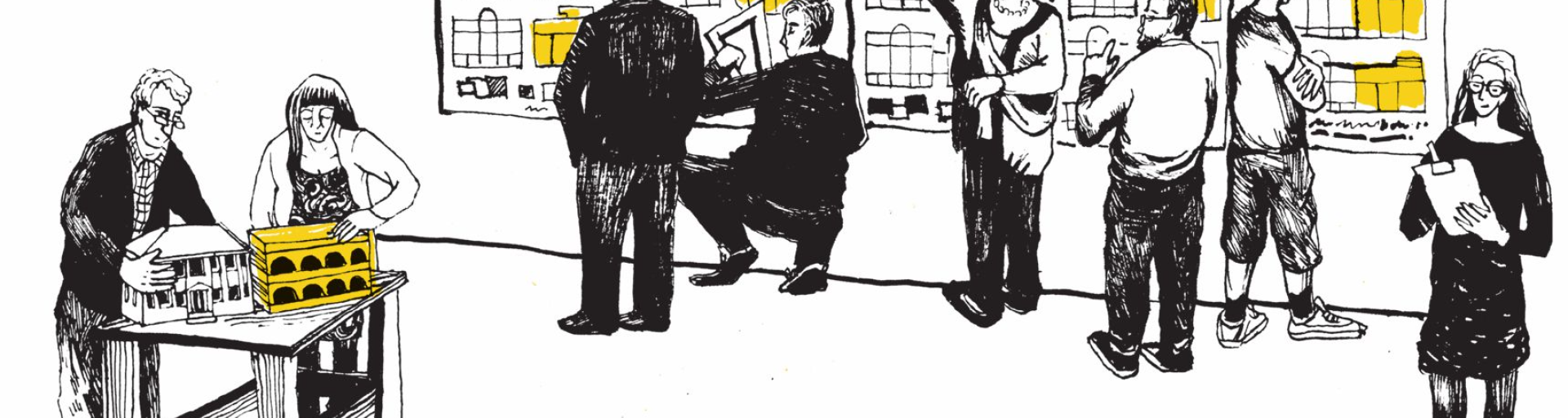
Step 08 – Consultation of the Design Proposal (2nd phase of participatory planning)
8.1 Description and objective
As in the first participation phase (step 6), it is essential to select a combination of participatory methods that allow people to actively engage while clearly understanding the project. This phase is an opportunity to clarify details, answer questions, and address concerns.
Selection of participatory methods may include:
- Open day
- Participation stand or container
- Online survey
- Online platform or integration with an existing platform
- Roundtable
- Newspaper insert
- Public hearing
- Individual presentation of the proposal to key stakeholders
8.2 Responsible persons
- Planning Coordinator / Participatory Planning Specialist
- Public authority commissioning the project (= investor)
- Author of the design concept
- External participation contractor (if applicable)
8.3 Consultation (as needed)
- City district Mayor’s office
- IPR (relevant office/section) – review of individual proposals
- IPR Participation Office – support in planning individual activities
8.4 Activities for success
The approach to consulting the proposal may vary depending on the chosen methods and target groups (e.g., round table for key stakeholders, participatory container or urban walk for the public). However, several core activities are common to all projects:
A. Select suitable participation methods
Select appropriate methods according to the target groups with whom you will consult the project proposal. The following matrix can help guide your choice.
B. Secure a participation contractor (if needed)
If your team lacks capacity or expertise, consider hiring an external provider. Evaluate potential providers based on both quality and experience – not price alone.
C. Consult with stakeholders
Share the proposal with key stakeholders for comments. Incorporate their feedback before engaging the broader public, as it defines the scope and limits of participation.
D. Consult the public
After incorporating stakeholder feedback, consult the draft with the public using the selected participation methods. Ideally, the author should attend these sessions to present the proposal and respond to technical questions.
E. Final output
Prepare a report summarizing the second phase of participation, including how the process was conducted, participant feedback, and how their suggestions and comments were recorded and addressed.
8.5 Outputs
Outputs may vary depending on the project. Recommended:
Output 8: Final report from the second phase of participation
Documenting the consultation process, comments, and residents' responses
8.6 Timeframe
4 – 8 weeks
8.7 Keep in mind
Public consultation on the proposal must take place well in advance of the deadline for approving the final project version by the investor, to allow sufficient time to incorporate feedback. All comments should be considered, regardless of their source or how they are expressed – whether from experts or residents.
From the outset, establish a system with the author (and, if applicable, the participation contractor) for documenting comments. The best approach combines on-site documentation (photos, audio recordings, questionnaires, etc.) with structured follow-up records (tables, meeting minutes, qualitative evaluations, etc.).
When presenting the proposal to the public and stakeholders, ensure the project is explained clearly and understandably. Prepare answers to common questions regarding parking, transport, green spaces, and other frequently asked topics. Be aware of related projects in the surrounding area that are planned or underway. The author should attend all consultations in person – this requirement should be included in the tender and contract.
8.8 Communication
Communication objective:
Informing about the consultation of the design concept proposal (2nd phase of participatory planning).
Communicate:
→ Send out invitations to individual meetings and events. Specify how, where, and until when it is possible to familiarize oneself with the proposal and provide feedback.
→ Explain the schedule of each event. Illustrate where you are in the process, using visualizations (before and after) or other engaging methods for media coverage.
→ If possible (depending on the participatory method used), publish the processing of individual comments from the consultation process and inform those who participated.
Communication tools:
Utilize all communication channels of the city district: website, social media, city district newsletter, Prague media, flyers, posters, etc. Engage local stakeholders, especially local “ambassadors”, to utilize their communication channels as well.
8.9 Parallel steps
Step 8 should be carried out independently, but the author can continuously incorporate and address feedback from the public and key stakeholders (step 9).