DEVADE: Prague's Architecture Amidst Austerity and Disco. A new book and exhibition at CAMP map Prague of the 1990s.
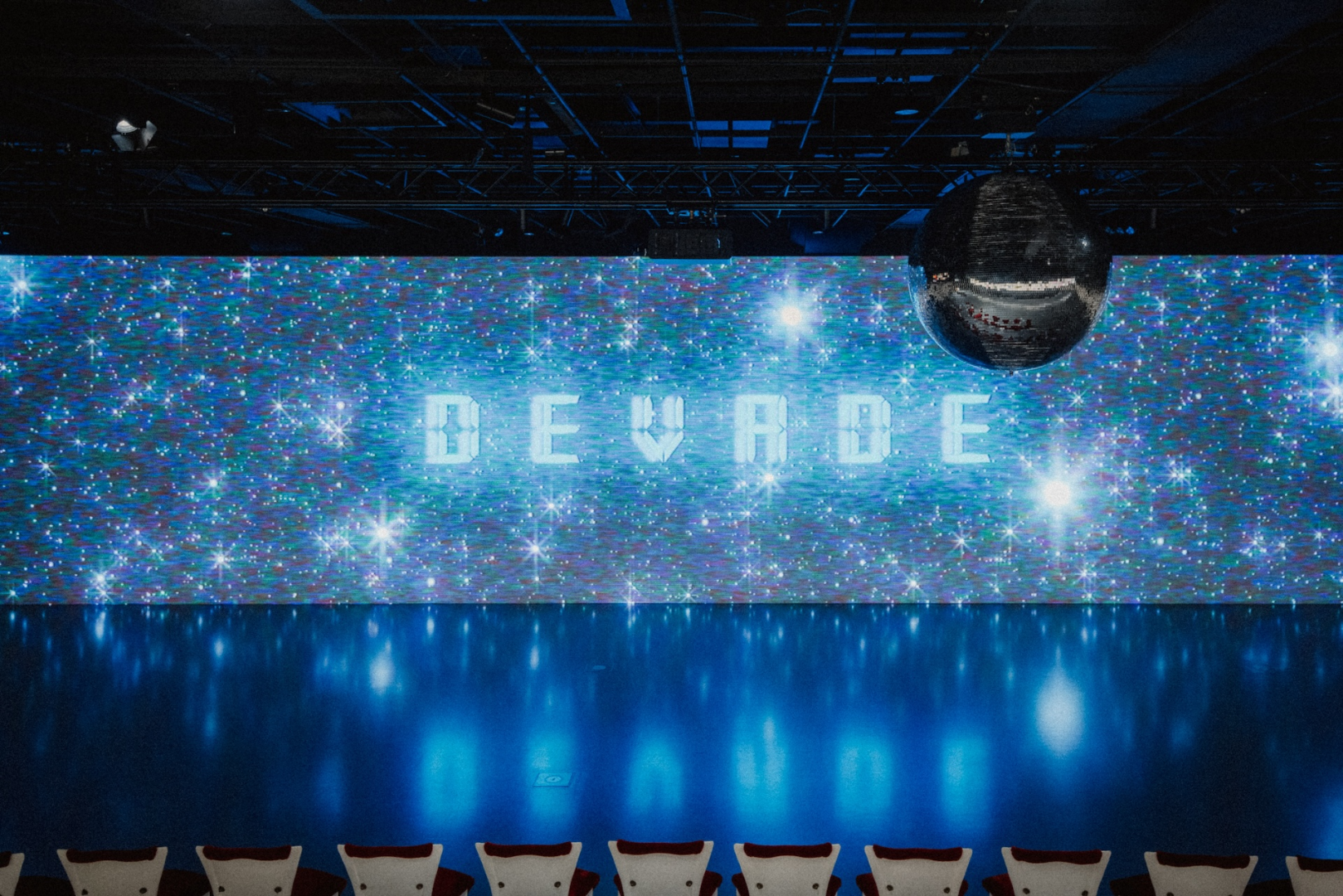
We often associate Prague of the the 1990s with wild parties, relaxed conventions, and an optimistic atmosphere. This vibe was also reflected in construction projects in the city. While the architectural community from this period emphasizes a return to strict proportions, honest materials, and buildings with deliberate character, the wider public mainly remembers the kitsch—conspicuous shapes, gold frames, and displays of wealth. What image did the combination and, to a certain extent, the rivalry between these two perspectives create? The new exhibition DEVADE at the Center for Architecture and Metropolitan Planning (CAMP), running from January 29 to May 17, 2026, presents buildings constructed in Prague between 1989 and 2004 and illustrates the changes of the period. It is based on the book of the same name by Matěj Beránek, Jan Bureš, Radek Šrettr Úlehla, and Adéla Vaculíková published by the Prague Institute of Planning and Development (IPR Prague).
"Understanding the architecture of the 1990s is crucial for Prague's planning, because many issues from that period, such as rail transport to Prague Airport or the completion of the outer Prague Ring Road, are still being dealt with today and are also addressed in the Metropolitan Plan. Another very topical issue for us is the opening of Prague Castle to the public, which took place in the 1990s under the leadership of Masák, and today we are continuing this work, for example, in the project to restore the park, Chotkovy sady, an area on the border between Prague Castle and the city center. With this exhibition, CAMP shows that without a deeper knowledge and understanding of recent history, it is not possible to plan the future of the city responsibly," says Ondřej Boháč, director IPR Prague.
The architecture built between the Velvet Revolution and the Czech Republic's accession to the European Union was primarily shaped by two distinct trends. On the one hand, "austerity" inspired by interwar modernism and functionalism; on the other, a free-spirited postmodernism arriving from the West, full of bizarre shapes and ostentation. After the fall of communism, Prague and the whole of Czechia opened up to an influx of foreign influences, new trends, and digital technologies. A number of now well-established studios were founded. The functioning of professional associations, the relationship to public space, the social status of architects, and even their perception by the country's political representatives changed. Foreign capital began to flow into Czechia, and relations between architects and private investors developed. The very first home improvement stores opened, and, among other things, banks, office buildings with flexible leases, and complex residential projects saw a construction boom. In addition, leading international architectural firms began operating in Prague for the first time, bringing big names such as Frank Gehry, Jean Nouvel, and Ricardo Bofill, who, together with local architects, changed the face of the city and built a number of now iconic buildings.
The DEVADE exhibition presents a selection of buildings that were constructed during this controversial but important era, tracking the atmosphere of the time and the circumstances of their creation. This comprehensive view of architecture from 1989 to 2004 is illustrated by stories and historical and contemporary photographs of selected buildings, including the iconic Dancing House, the often-maligned Don Giovanni Hotel, the Hilton Prague, the Prague Exhibition Grounds with the Křižík Pavilions, Spirála, and the Pyramid theater, as well as the Metro B Bridge tunnel, visually reminiscent of a writhing snake between housing estate blocks.
Mohlo by Vás také zajímat
Kvalitnější dlažba i sukulenty mezi kolejemi. Praha představila Standard tramvajových tratí

Proběhly odborné konzultace potřebné pro koncepci veřejného osvětlení v Praze