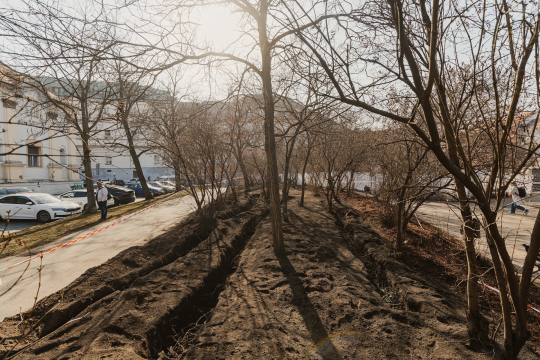
Prague residents live in economically mixed areas, according to a new analysis by IPR Prague.
Prague has long maintained a low level of residential segregation, as confirmed by a new analysis from the Prague Institute of Planning and Development (IPR Prague). Residents remain relatively evenly distributed, with different population groups mixing across various parts of the city. However, the analysis also points to a gradual increase in disparities in the distribution of low- and high-income groups in certain areas. This is an emerging trend that will need to be monitored in the future.
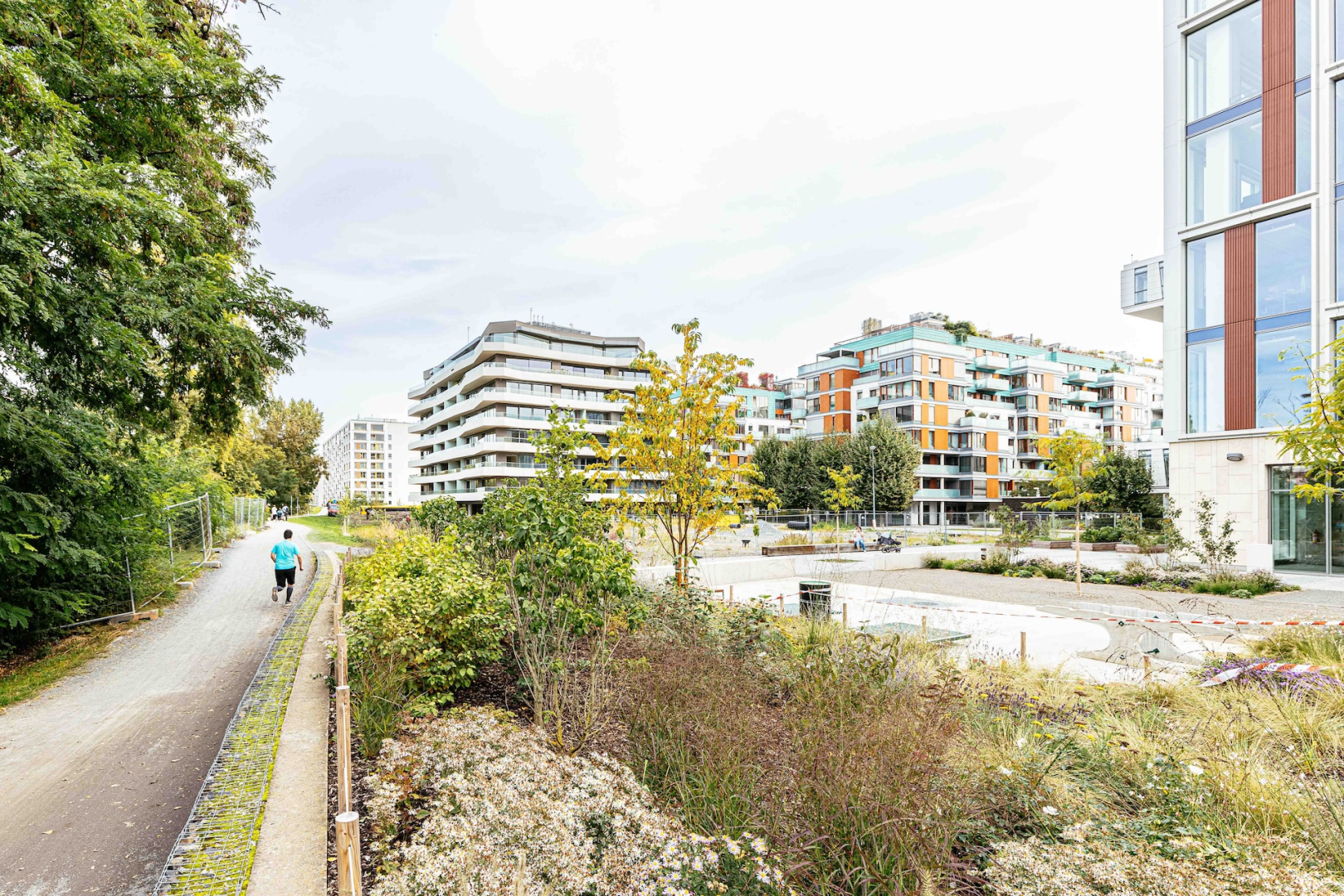
Preventing the emergence of gated communities is one of Prague’s priorities
“Prague is still a city where people from different professions and income groups meet naturally in everyday life. This is essential for the city to function well. We are not seeing large, isolated enclaves of any single group emerge, but some disparities are gradually becoming more pronounced,” says Ondřej Boháč, Director of IPR Prague.
Residential segregation refers to the concentration of people with different social backgrounds in specific parts of the city. When segregation becomes more pronounced, it can affect not only the lives of individual groups, but also the way society functions as a whole. It is not only a question of income, but more broadly of people’s position in the labor market; for example, whether they work in highly skilled professions, administration, services, or manual jobs.
Where in Prague do different population groups live?
Lower socioeconomic groups tend to live in specific housing estates, parts of the inner city, and areas on the city’s outskirts close to industrial zones, including Černý Most, Horní Počernice, Libeň, and Vysočany. The upper-middle class is more commonly found in traditionally attractive neighborhoods such as Dejvice, Letná, and Vinohrady, which offer strong amenities and good transport connections. The upper class is concentrated mainly in newer residential developments, for example in Jinonice, Hrdlořezy, and Holešovice. These are also the types of areas where gated communities — closed residential complexes often accessible only to their residents — may emerge.
“Closed, impenetrable areas known as gated communities are a legacy of the 1990s, when the planning of new neighborhoods was often poorly coordinated. Today, however, the public interest is protected not only through IPR Prague’s ongoing work, but also through planning agreements that help coordinate the city, municipal districts, and private investors. The Metropolitan Plan will also help ensure that different areas of the city remain accessible,” says Petr Hlaváček, Deputy Mayor of Prague for Spatial and Strategic Development.
“From the perspective of urban planning and housing policy, it is crucial to support a socially
“From the perspective of urban planning and housing policy, it is essential to support a socially diverse urban environment. This can be achieved above all through the construction of affordable housing in different parts of the city, a balanced mix of functions and housing types, and a strong focus on the quality of public space and civic amenities across neighborhoods,” adds Ondřej Boháč.
The analysis shows a similar trend in the areas surrounding Prague
Segregation also remains low in the Prague metropolitan region. Compared to Prague itself, however, higher-income households are more spatially concentrated in the surrounding municipalities, particularly those closest to the capital and shaped by intensive residential suburbanization, such as Černošice, Dolní Břežany, Jesenice, and Zdiby.
By contrast, socially disadvantaged groups are more concentrated farther from Prague, especially in smaller municipalities with large industrial or agricultural enterprises and dormitories for support staff. A similar pattern can also be seen in larger towns and cities such as Kladno, Neratovice, Beroun, and Benešov.
You can find the analysis of residential segregation here (CZ only).
Mohlo by Vás také zajímat
Z archivu IPR: Jak se plánoval Dvorecký most v průběhu let?
Různé skupiny Pražanů žijí „promíchaně“ napříč městem, ukazuje nová analýza IPR Praha