A feast of books in an industrial hall: the Center for Architecture and Metropolitan Planning opens its new location in Karlín.
The Center for Architecture and Metropolitan Planning (CAMP) has opened its new location at Pobřežní 20a in Prague’s Karlín district. CAMP's program has been launched with two new exhibitions. All You Can Read: How to Read and Plan a City? invites visitors to an unusual literary feast, bringing together the best of Czech and international literature on architecture, urban planning, and urban development, offering inspiration and insights for the future development of Prague. The accompanying exhibition, Houseplants, Slippers, and Space Heaters, by photographer Vojtěch Veškrna, offers an unusual glimpse behind the scenes of the final days at the Prager Cubes before their renovation.
“Throughout its existence, CAMP has become an indispensable place for everyone interested in Prague’s development and eager to take part in shaping it. Urban planning is above all about dialogue, and CAMP provides a space where experts from the Prague Institute of Planning and Development (IPR Prague), architects, urban planners, politicians, and, above all, members of the public can come together. I believe that its temporary home in Karlín will continue to provide existing services at the high standard visitors have come to expect,” says Petr Hlaváček, Mayor of Prague. Among the books he recommended for the exhibition are Cities Without Plans by Alain Bertaud and A City for Everyone: A Beginner’s Guide to Urban Planning by Osamu Okamura.
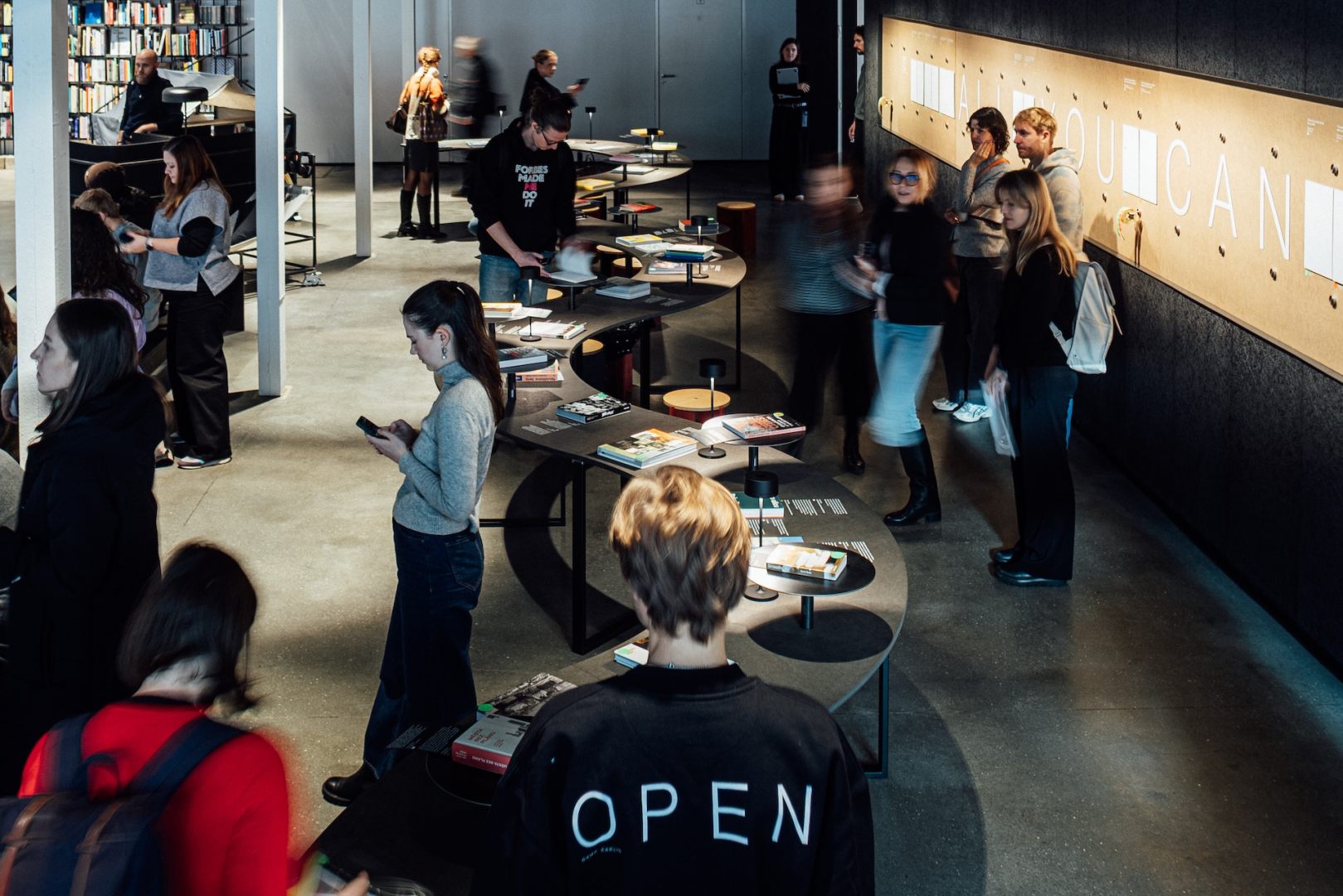
CAMP Karlín
While CAMP's original premises in the Prager Cubes undergo renovation, its cultural program will continue in an industrial hall dating back to 1915. In the nineteenth century, the building served as a showroom for distillery and sugar refinery machinery, and later for Perun washing machines. Over the past decade, it has been repurposed as a gallery and venue for cultural events.
The official opening of CAMP in Karlín took place on the evening of November 24, along with the opening of two exhibitions that symbolically connect this new chapter with CAMP's original home. While the main exhibition, All You Can Read: How to Read and Plan a City?, looks for inspiration on the future of Prague through books on architecture, urban planning, and urban development, the accompanying photography exhibition, Houseplants, Slippers, and Space Heaters, looks back at life in the Prager Cubes.
“The All You Can Read exhibition presents books offering a variety of perspectives on how cities function and what everyday life in them is like—perspectives that are sometimes even contradictory. The selection ranges from urban planning classics to contemporary critical publications. Comparing these different viewpoints can help us better understand the challenges facing Prague and find inspiration and new solutions for its future development,” says Ondřej Boháč, Director of the Prague Institute of Planning and Development.
“In many ways, CAMP Karlín is similar to CAMP in the Prager Cubes. In this industrial space, we have made use of all the original furnishings and added only what was absolutely necessary. Just as with the renovation of our permanent headquarters, we are applying a circular approach here as well,” adds Adam Švejda, Deputy Director of the Prague Institute of Planning and Development.
All You Can Read: How to Read and Plan a City?
Which three books would you recommend to the Mayor of Prague to help guide the city’s development? CAMP put this very question to experts who work with and study the city. Their responses formed the basis for the main exhibition: a menu of 40 titles for both adult and young readers.
“It is no coincidence that we are opening CAMP’s new temporary location with the All You Can Read exhibition. Like CAMP itself, the exhibition aims to start a discussion about Prague’s future and involve the wider public. It shows that books can offer not only new perspectives on the city but also concrete inspiration for its future development. After all, members of the public themselves contributed to the book selection alongside experts,” explains Štěpán Bärtl, Head of CAMP.
Alongside urban planning classics such as Jane Jacobs’s The Death and Life of Great American Cities and Jan Gehl’s Cities for People, the main book selection features titles addressing the contemporary challenges facing cities. The global housing crisis is explored in publications such as In Defense of Housing by David Madden and Peter Marcuse and Capital City by Samuel Stein. The selection also includes Feminist City by Leslie Kern, as well as books focusing on the reuse of building materials and architecture’s response to climate change.
The exhibition’s expert ambassadors include Matt Field, British Ambassador to the Czech Republic; Jan Kasl, Chairman of the Czech Chamber of Architects; Petra Marko, Director of the Bratislava Metropolitan Institute; Barbora Bírová, Director of the Platform for Social Housing; architect and urban planner Pavel Hnilička; urban planner Peter Bednár; and trend forecaster Pavlína Louženská.
Designed by the architects at Studio Schwestern, the exhibition hall has been transformed into a playful reading room and study space. Its centerpiece is a 12-meter-long undulating table on which the main book selection is presented as a literary menu.
Visitors can also explore a library containing nearly 1,000 additional publications from CAMP’s collection, including professional journals, manuals, and urban planning concepts. Various cozy reading nooks equipped with lamps, along with playful and comfortable furniture, invite visitors to settle down with a book.
The exhibition also encourages active participation. In a large interactive display, visitors can vote on whether they agree with selected ideas from the books or recommend titles they feel are missing from the exhibition.
The display is complemented by an audiovisual presentation created by screenwriter and curator Eugen Liška, which connects ideas from the books with specific, sometimes surprising, situations from urban life.
The main exhibition titles are available in both Czech and English. Visitors can also purchase selected publications.
Vojtěch Veškrna: Houseplants, Slippers, and Space Heaters
While the main All You Can Read exhibition looks for inspiration for Prague’s future, the photography exhibition Houseplants, Slippers, and Space Heaters looks back at a place that the Prague Institute of Planning and Development and CAMP have temporarily vacated due to the ongoing renovation.
Photographer Vojtěch Veškrna captured the Prager Cubes shortly before they closed—not simply as an important work of modernist architecture dating from 1973, but above all as a space that its everyday users had gradually made their own and transformed over time.
His photographs reveal personal retreats, favorite corners, and seemingly insignificant objects that tell the story of everyday life among IPR Prague employees. The result is a distinctive visual archaeology of everyday life, where the atmosphere of an office intertwines with that of a home, accompanied by a subtle sense of melancholy at the moment of farewell: the Prager Cubes as you may never have seen them before.
You can find more information and the full program here.
Mohlo by Vás také zajímat
Knižní hostina v industriální hale. Centrum architektury a městského plánování otevírá nové prostory v Karlíně

Hřbitovy jsou pro Pražany místem pro pietu i sport. Jejich vztah k pohřbívání se mění