
Step 04 – Community and User Mapping
4.1 Description and objective
At this stage, you will “map the terrain” by identifying the people and organizations directly impacted by the project. This typically includes residents and users – those who live, work, or commute to the area for school or work. However, it also encompasses business owners, service providers and their employees, visitors, and tourists. Civic initiatives and associations that advocate for local interests should also be considered.
It is equally important to include stakeholders who are interested in the project, even if they are not directly affected. This might include local organizations focused on ecology or transportation, local governance bodies (e.g., MA21 coordinators), cultural organizations that contribute to public space enhancement, chambers of commerce, or other professional associations. Additionally, local experts – long-term residents, historians, amateur ornithologists, or community memory keepers – can provide valuable insights.
The goal of this step is to map all affected and interested groups, comprehend what matters to them, and use this understanding to guide their engagement in the participatory process.
Identify potential conflicts, focus on key interests, and involve people actively to ensure the project benefits from their insights.
4.2 Responsible person
Planning Coordinator / Participatory Planning Specialist
4.3 Consultation (as needed)
- IPR Participation Office – support for project planning and community mapping
- City district / City of Prague departments (relevant offices and individuals)
4.4 Activities for success
A. Review existing materials
Before starting the mapping process, review all existing materials related to the communities in your city district or project area. This may include demographic studies, older strategic plans, sociological surveys, minutes from past community meetings, documents from previous planning projects, participatory budgets, or initiatives linked to MA21 and Healthy Cities. Older materials often contain valuable information that can make the mapping process easier.
B. Workshop with city district’s / City of Prague’s employees
After reviewing the materials, organize a small workshop with representatives from relevant departments (e.g., social affairs, environment, culture, transport, education). Include employees who live in the project area or have experience with the topic. Ask colleagues to recommend who could contribute their expertise.
During the workshop, jointly define the target groups affected by the project and those the departments interact with. These may include residents, business owners, institutions (schools, senior homes, etc.), associations, civic initiatives, homeowners’ associations, key service providers, and operators. The workshop’s output is a list of target groups to be involved in the participatory process, including contact details and topics on which they have relevant input.
C. Field interviews
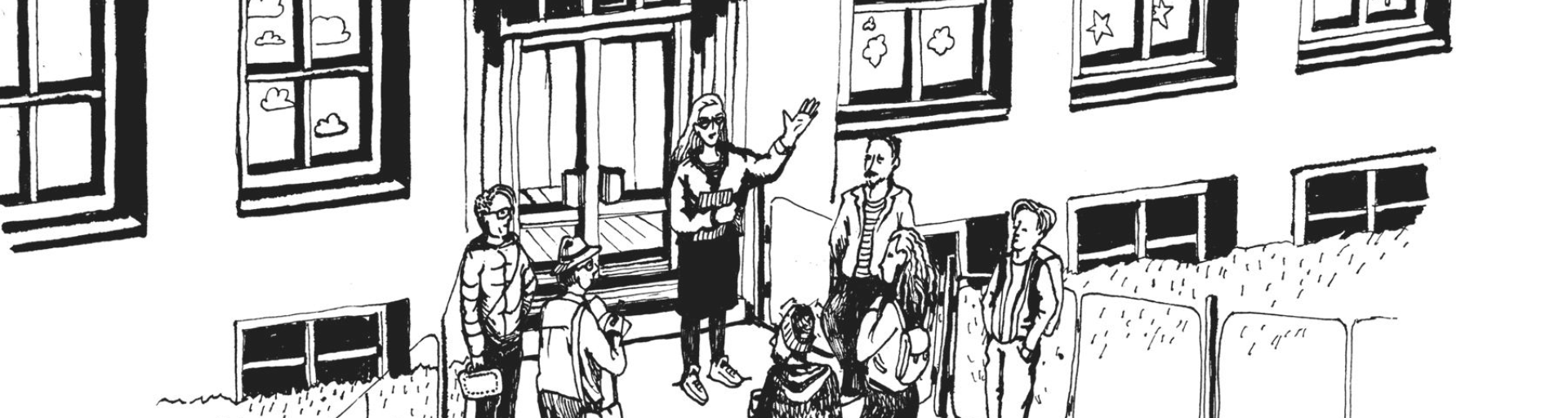
Following the workshop, engage directly with the community. Meet representatives of each target group, preferably in person, and conduct semi-structured interviews. These conversations will provide insight into how the area functions, residents’ perspectives on collaboration with the city district or other institutions, local interactions, and their real needs (both for the project and more generally). For more complex projects, consider commissioning external field mapping, such as an anthropological survey. Consult with IPR for assistance in developing a commission brief for potential contractors.
D. Prepare outputs
From all the collected information, create a community map (output 4A) and a list of communities (output 4B).
4.5 Outputs
Outputs may vary depending on the project. Recommended:
Output 4A: Community map
Output 4B: List of communities with contact information
Table – template available for download
4.6 Timeframe
Typically 1 month, although more complex projects may take longer.
4.7 Keep in mind
Field interviews often reveal additional target groups that may have been overlooked during the workshop. They provide a deeper understanding of how local communities function from the “bottom-up”. However, mapping can sometimes resemble detective work. Individual opinions need to be verified, as not everyone speaks on behalf of the community. Beware that in addition to the interests and needs of the target group, some respondents may also promote their personal interests or opinions.
4.8 Communication
Communication objective:
Raising awareness about the preparation of the project (urban study, revitalization, strategy, etc.)
Communicate:
→ What will happen?
→ What is already established?
→ What is open for public discussion?
→ When and how can the public participate?
→ Enhance public familiarity with the area (story, attractions, historical points of interest).
→ Explain the roles of individual stakeholders.
→ Address any sensitive topics or existing conflicts, preferably at the outset rather than during the project.
→ Present the timeline of the project (if you already have a clear plan at this point).
Communication tools:
Utilize all communication channels of the city district: website, social media, city district newsletter, Prague media, etc.
4.9 Parallel steps
While carrying out step 4, you can simultaneously implement steps 1 – 3.